Introduction
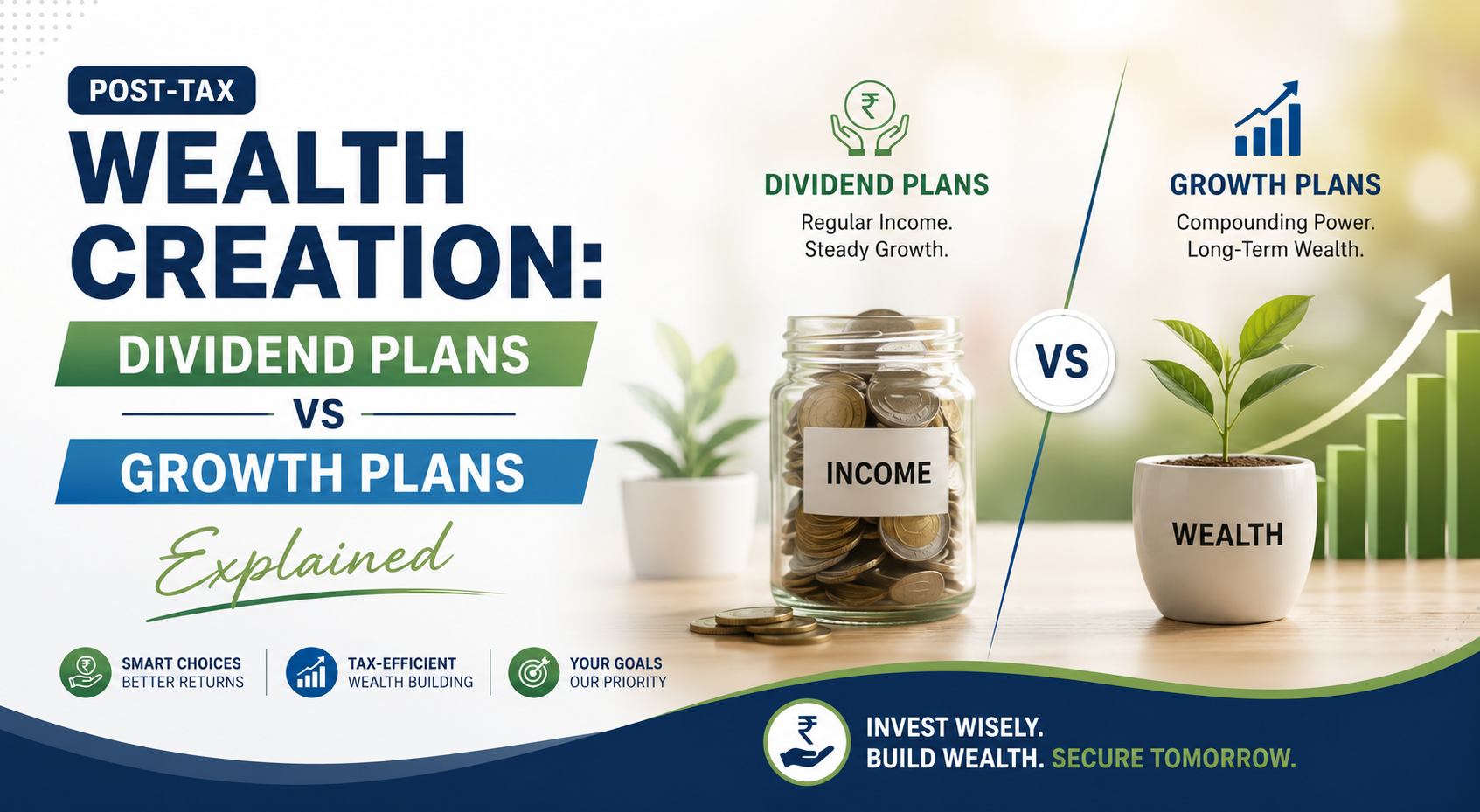
When investing in mutual funds, choosing between a Dividend Plan and a Growth Plan can significantly impact your long-term wealth. While both options invest in the same portfolio, the way returns are handled differs. Understanding their tax implications is essential for maximizing post-tax wealth creation.
What Is a Dividend Plan?
A Dividend Plan distributes a portion of the mutual fund's profits to investors at intervals decided by the fund house. These payouts are not guaranteed and depend on the fund's performance and available surplus.
Key Features:
Provides periodic income to investors.
Dividends are paid out from the fund's profits.
The fund's NAV decreases after dividend distribution.
Suitable for investors seeking regular cash flow.
Although dividends provide income, they reduce the amount remaining invested in the fund, which can limit future growth.
What Is a Growth Plan?
A Growth Plan reinvests all profits earned by the mutual fund back into the scheme. Instead of receiving payouts, investors benefit from the growth of their investment over time.
Key Features:
No periodic dividend payouts.
Profits remain invested in the fund.
Higher potential for long-term wealth creation.
Ideal for investors with long-term financial goals.
Since returns stay invested, Growth Plans take full advantage of compounding.
Understanding the Tax Difference
Taxation plays a major role in determining actual investment returns.
Dividend Plan Taxation
Dividends received from mutual funds are taxable according to the investor's income tax slab. Investors in higher tax brackets may pay a significant portion of their dividend income as tax.
As a result:
Regular payouts can create recurring tax liabilities.
Less money remains available for future growth.
Growth Plan Taxation
In Growth Plans, investors generally pay tax only when they redeem their units. This allows investments to grow without annual tax deductions on distributed income.
Benefits include:
Tax deferral until redemption.
More money stays invested.
Greater compounding potential.
The Power of Compounding
For example, if two investors invest the same amount in identical funds:
One chooses a Dividend Plan and receives taxable payouts.
The other chooses a Growth Plan and reinvests all returns.
Over 10 to 20 years, the Growth Plan investor is likely to accumulate more wealth because returns continue compounding without interruption.
This difference becomes more noticeable as the investment period increases.
Dividend Plans (IDCW): Regular Income but Higher Tax Impact
Dividend Plans, now known as IDCW (Income Distribution cum Capital Withdrawal), provide periodic payouts to investors from the mutual fund. While these payouts can offer regular income, the distributed amount is taxable according to the investor's income tax slab. As a result, a portion of the earnings is lost to taxes, reducing the amount that remains invested and limiting long-term wealth creation.
Growth Plans: Better for Long-Term Wealth Creation
Growth Plans reinvest all profits back into the mutual fund instead of distributing them. This allows the investment to benefit from continuous compounding, helping the corpus grow faster over time. Since taxes are generally payable only when the units are redeemed, investors can defer taxation and maximize the growth potential of their investments. For long-term wealth creation, Growth Plans are often considered the more tax-efficient choice.
Who Should Choose a Dividend Plan?
A Dividend Plan may be suitable for:
Retirees seeking regular income.
Investors who need periodic cash flow.
Individuals with short-term income requirements.
However, investors should remember that dividends are not additional returns. The payout comes from the fund's assets, which reduces the NAV.
Who Should Choose a Growth Plan?
A Growth Plan is often suitable for:
Long-term investors.
Individuals saving for retirement.
Parents planning for children's education.
Investors aiming to maximize wealth accumulation.
By keeping profits invested, Growth Plans can generate stronger long-term results through compounding.
Which Option Creates More Post-Tax Wealth?
For most long-term investors, Growth Plans generally create greater post-tax wealth because:
Earnings remain invested.
Taxes are deferred until redemption.
Compounding works more effectively.
There is less tax-related erosion of returns.
Dividend Plans may provide convenience for income needs, but they can slow overall wealth accumulation due to regular payouts and taxation.
Conclusion
The choice between Dividend Plans and Growth Plans depends on your financial goals. If your priority is regular income, a Dividend Plan may be useful. However, if your objective is long-term wealth creation and maximizing post-tax returns, a Growth Plan is often the better option.
For most investors, allowing investments to compound over time while postponing taxes can lead to significantly higher wealth accumulation. Before investing, consider your income needs, investment horizon, and tax situation to select the option that best supports your financial goals.