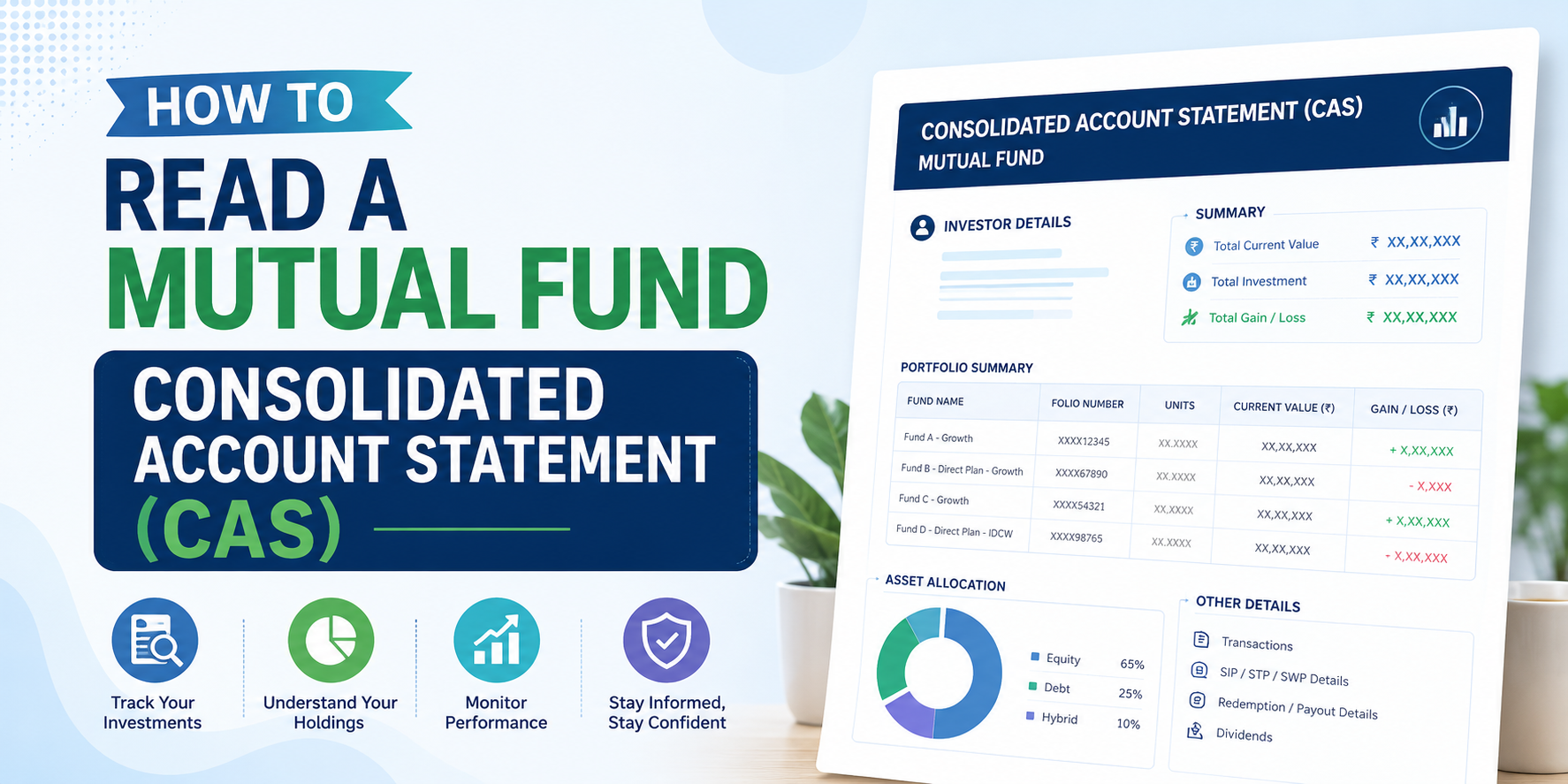
How to Read a Mutual Fund Consolidated Account Statement (CAS)
Investing in mutual funds is one of the most effective ways to build long-term wealth. However, many investors overlook one important document that provides a complete picture of their investments—the Consolidated Account Statement (CAS).
Whether you're a beginner or an experienced investor, understanding your CAS can help you monitor your portfolio, review investment performance, and make informed financial decisions.
In this guide, we'll explain every section of a Mutual Fund Consolidated Account Statement in simple language.
What is a Mutual Fund Consolidated Account Statement (CAS) ?
A Consolidated Account Statement (CAS) is a single document that summarizes all your mutual fund investments linked to your PAN. Instead of receiving separate statements from each Asset Management Company (AMC), you receive one consolidated statement containing all your holdings.
The statement is generally sent monthly if any transaction has occurred during the month. If there are no transactions, investors may receive it periodically as per regulatory guidelines.
A CAS helps investors keep track of their investments without logging into multiple fund houses.
Why is CAS Important ?
Your Consolidated Account Statement serves as your investment report card. It helps you:
- View all mutual fund investments in one place
- Track portfolio performance
- Verify transactions
- Monitor SIP investments
- Check current market value
- Identify underperforming funds
- Plan tax-saving investments
- Detect unauthorized transactions
Instead of checking multiple statements, one CAS gives a complete overview of your investment portfolio.
Sections of a Mutual Fund CAS
Let's understand each section one by one.
1. Investor Details
At the beginning of the statement, you'll find:
- Investor Name
- PAN Number
- Registered Email
- Mobile Number
- Address
- Folio Numbers
Always verify these details. Incorrect information can create issues during redemption or future transactions.
2. Folio Number
A Folio Number works like an account number for your mutual fund investment.
Each AMC assigns a unique folio number where your investments are maintained.
If you invest in different AMCs, you'll likely have multiple folio numbers.
3. Scheme Name
This section displays the names of all mutual fund schemes you have invested in.
For example:
- Large Cap Fund
- Flexi Cap Fund
- ELSS Tax Saver Fund
- Hybrid Fund
- Debt Fund
Each scheme will have its own investment details.
4. Transaction Summary
This is one of the most important sections.
It records every activity in your investment account, such as:
- Purchase
- SIP Installments
- Redemption
- Switch
- Dividend (if applicable)
- STP
- SWP
Each transaction includes:
- Date
- Transaction Type
- Amount
- NAV
- Units Purchased or Redeemed
Review this section regularly to ensure every transaction is accurate.
5. Units Held
This section shows the total number of mutual fund units you currently own.
For example:
Investment Amount: ₹1,00,000
Current Units Held: 4,325.765 Units
As the NAV changes daily, the value of these units also changes.
6. Net Asset Value (NAV)
NAV stands for Net Asset Value.
It represents the price of one mutual fund unit.
Example:
Current NAV = ₹32.45
Units Held = 500
Current Value = ₹16,225
NAV changes every market day depending on the value of the fund's underlying investments.
7. Current Market Value
This tells you the present value of your investment.
Formula:
Current Value = Units × Latest NAV
This figure helps you understand how much your investment is worth today.
8. Cost of Investment
This section shows the total amount you have invested in the scheme.
Example:
Total Investment = ₹2,50,000
Current Value = ₹3,10,000
Profit = ₹60,000
Comparing the investment cost with the current value helps you evaluate your returns.
9. Nominee Details
Your CAS also includes nominee information.
Always ensure:
- Nominee Name is correct
- Relationship is updated
- Nominee percentage is accurate
Keeping nominee details updated ensures a smoother claim process for your family if needed.
10. SIP Information
If you invest through a Systematic Investment Plan (SIP), the CAS provides details such as:
- SIP Amount
- Frequency (Monthly/Quarterly)
- Installments Paid
- Next SIP Date
- Total SIP Investment
Review this section to ensure all SIP installments are processed successfully.
How to Use CAS Effectively
Reading your CAS regularly can improve your investment discipline.
Here are a few best practices:
Track Portfolio Performance
Compare your investment value with your total investment to assess growth over time.
Review Asset Allocation
Ensure your investments are diversified across equity, debt, and hybrid funds according to your financial goals and risk tolerance.
Monitor SIP Consistency
Check that all scheduled SIPs have been credited without interruptions.
Identify Underperforming Funds
Compare the performance of different schemes in your portfolio. If a fund consistently underperforms its benchmark or peers over a long period, consider reviewing it with a financial advisor.
Keep Personal Details Updated
Verify your contact information, bank details, and nominee details periodically to avoid delays during future transactions.
Common Mistakes Investors Make
Many investors receive their CAS every month but never review it.
Some common mistakes include:
- Ignoring transaction errors
- Not updating nominee details
- Forgetting old investments
- Overlooking discontinued SIPs
- Missing duplicate investments
- Not reviewing portfolio diversification
A quick review each month can help prevent these issues.
Benefits of Reading Your CAS Regularly
Checking your Consolidated Account Statement helps you:
- Stay informed about your investments
- Monitor long-term wealth creation
- Detect unauthorized transactions early
- Evaluate portfolio performance
- Improve financial planning
- Maintain accurate investment records
- Make better investment decisions
Even spending a few minutes each month reviewing your CAS can significantly improve your financial awareness.
Final Thoughts
A Mutual Fund Consolidated Account Statement (CAS) is much more than a transaction record—it is a comprehensive snapshot of your investment journey. By understanding each section, including folio numbers, scheme details, NAV, units held, current value, SIP records, and nominee information, you can stay in control of your portfolio and make well-informed financial decisions.
Make it a habit to review your CAS every month. Regular monitoring helps you identify discrepancies, track progress toward your financial goals, and ensure your investments remain aligned with your risk profile and objectives.
Remember, successful investing is not just about choosing the right mutual funds—it's also about staying informed and actively managing your portfolio. Your CAS is one of the simplest yet most powerful tools to help you do exactly that.