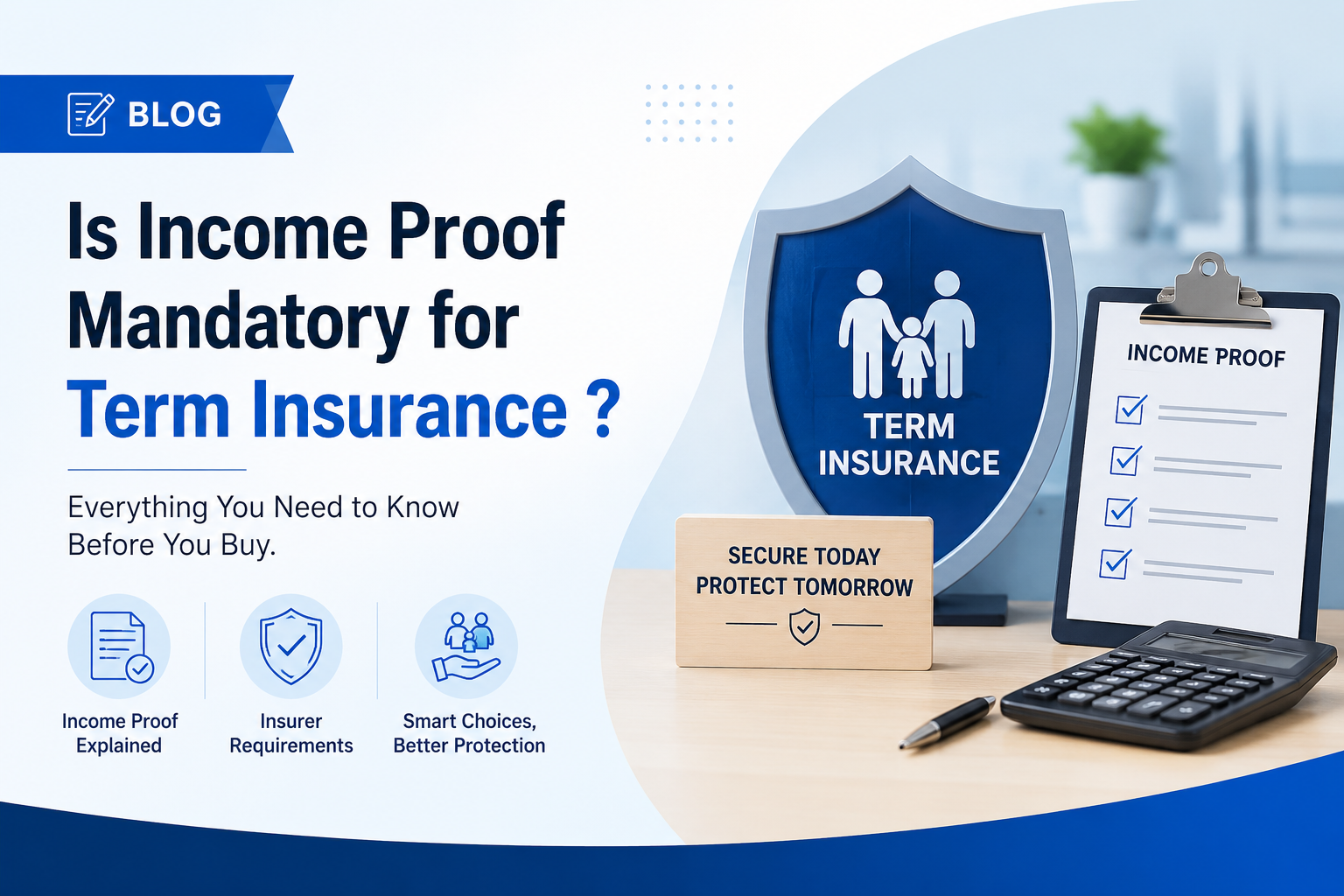
Is Income Proof Mandatory for Term Insurance ?
Term insurance is one of the most affordable and effective ways to secure your family’s financial future. It provides a large life cover at a lower premium, ensuring that your loved ones are financially protected in case of an unfortunate event. However, one common question many buyers ask is: Is income proof mandatory for term insurance ?
The simple answer is yes, in most cases, insurance companies ask for income proof when purchasing a term insurance policy. However, there are some exceptions depending on the insurer, policy amount, and applicant profile. Let’s understand this in detail.
Why Do Insurance Companies Ask for Income Proof ?
Insurance companies use income proof to evaluate a person’s financial background and determine whether the chosen sum assured (coverage amount) is suitable. Since term insurance offers a high life cover, insurers want to ensure that the policy amount matches the policyholder’s earning capacity.
The purpose of asking for income proof includes:
1. To Determine Eligibility
Insurance companies calculate the maximum coverage based on your annual income. For example, a person earning ₹5 lakh annually may qualify for a lower sum assured than someone earning ₹20 lakh per year.
2. To Avoid Over-Insurance
A very high insurance amount compared to a person’s income may raise concerns. Insurers avoid approving excessively high coverage because it may increase financial risk.
3. Faster Claim Settlement
Accurate financial information reduces complications during claim settlement. Proper documentation helps family members receive claim benefits smoothly.
4. Financial Verification
Income proof helps insurers confirm employment status, profession, and repayment ability for premium payments.
What Documents Are Accepted as Income Proof ?
Insurance providers generally accept several types of financial documents. The required proof may vary depending on employment type.
For Salaried Employees
If you work in a private company or government sector, insurers may ask for:
- Salary slips (last 3–6 months)
- Bank account statements
- Income Tax Returns (ITR)
- Form 16
- Employment ID or appointment letter
For Self-Employed Individuals
Business owners and freelancers may need to submit:
- Income Tax Returns (ITR)
- Profit and loss statements
- GST returns
- Business registration documents
- Bank statements
For Professionals
Doctors, lawyers, consultants, and chartered accountants may provide:
- Professional income certificates
- ITR documents
- Business or practice registration details
Is Income Proof Always Mandatory ?
The requirement depends on several factors.
1. Policy Coverage Amount
For higher sum assured plans such as ₹50 lakh, ₹1 crore, or more, income proof is usually mandatory. Insurers want to confirm whether the applicant qualifies for such coverage.
For lower coverage policies, some insurers may offer simplified plans with minimal documentation.
2. Age of Applicant
Young applicants with stable employment may face easier documentation requirements compared to older applicants.
3. Occupation Type
People in high-risk professions or irregular income categories may need additional financial documents.
4. Existing Insurance Policies
If you already have multiple insurance policies, insurers may ask for income proof to evaluate your total coverage.
Can You Buy Term Insurance Without Income Proof ?
Yes, in certain situations, some insurers may provide term insurance without strict income documentation. However, this usually applies to:
- Low sum assured policies
- Limited coverage plans
- Simplified issue insurance products
- Certain digital term plans with relaxed requirements
Still, these policies may come with lower coverage limits or stricter eligibility conditions.
What Happens If You Do Not Provide Income Proof ?
Failure to provide proper income proof can lead to:
Policy Rejection
The insurer may reject the application if financial details are incomplete.
Lower Coverage Approval
Instead of the requested sum assured, the insurer may approve a lower coverage amount.
Delays in Processing
Verification delays may increase the policy approval time.
Claim Complications
Incorrect or hidden financial details can create issues during claim settlement.
Tips Before Applying for Term Insurance
To make the application process smoother, follow these simple tips:
Choose the Right Coverage
Avoid selecting an unrealistic insurance amount. Choose coverage that matches your income and family responsibilities.
Keep Documents Ready
Maintain updated salary slips, ITR records, and bank statements before applying.
Be Honest in Declaration
Always provide correct income details. Hiding information may create future claim problems.
Compare Policies
Different insurers have different documentation rules. Compare plans carefully before purchasing.
Final Thoughts
Income proof is generally an important requirement for term insurance because insurers use it to assess eligibility and determine suitable coverage. While lower-value policies may sometimes require fewer documents, higher coverage plans usually need financial proof to avoid risks and ensure proper underwriting.
Providing genuine and accurate income details not only increases approval chances but also helps ensure smooth claim settlement for your family in the future. Before buying a term insurance policy, understand the insurer’s documentation requirements and select a plan that aligns with your financial profile and long-term goals.
A term insurance plan is not just a policy—it is a financial safety net for your loved ones when they need it the most.