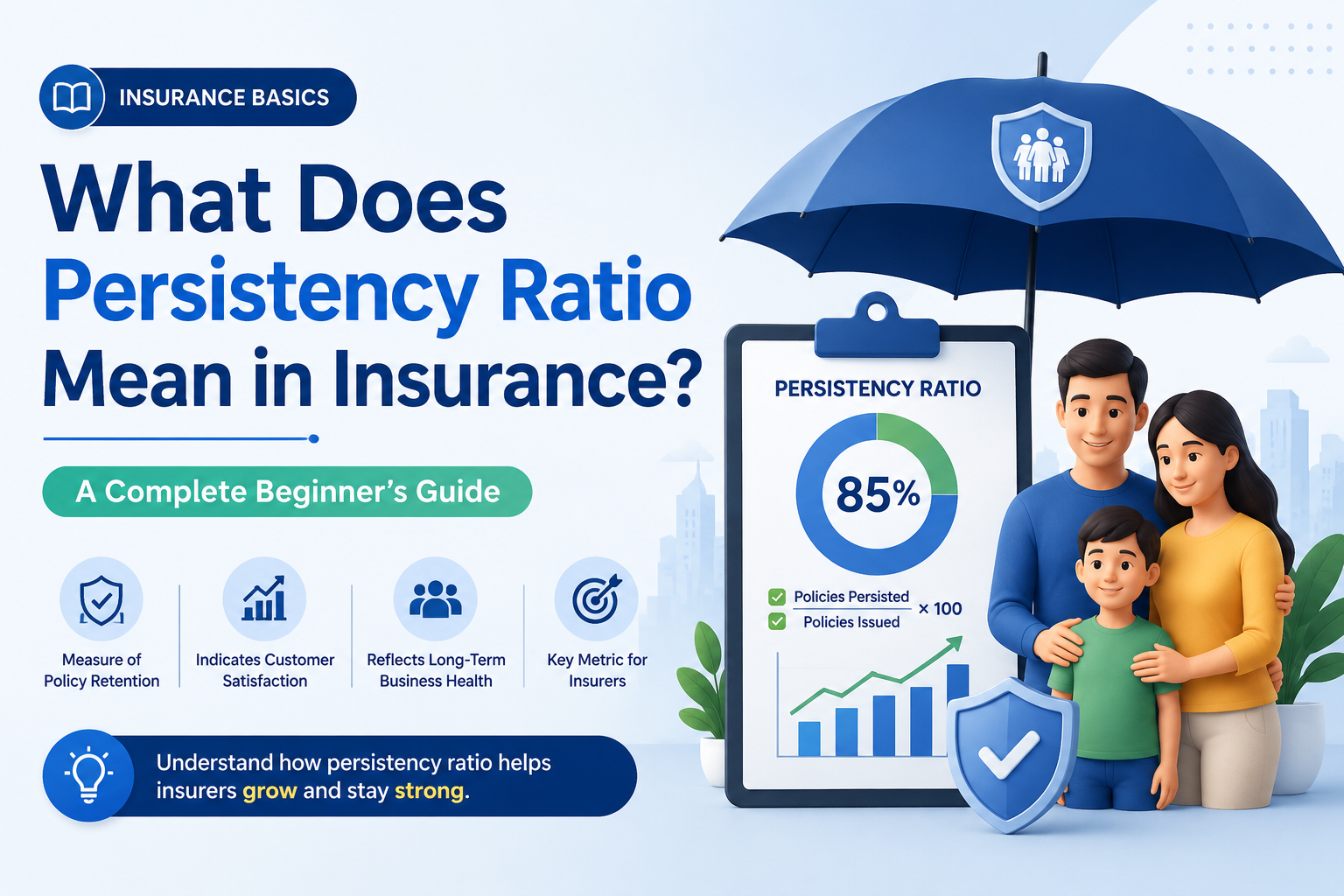
What Does Persistency Ratio Mean in Insurance ? A Complete Beginner’s Guide
When selecting an insurance plan, people usually compare premiums, benefits, and claim settlement records. However, one important factor that many buyers ignore is the persistency ratio. This term may sound technical, but it plays a major role in understanding the reliability and performance of an insurance company.
In simple words, the persistency ratio shows how many customers continue paying their premiums and keep their insurance policies active over time. It reflects customer satisfaction, trust, and the quality of services offered by an insurer.
If you are planning to purchase an insurance policy, learning about the persistency ratio can help you make a better and more informed decision.
What Is Persistency Ratio ?
The persistency ratio is a measurement used in the insurance industry to determine how many policyholders continue their insurance plans by paying premiums regularly instead of stopping or surrendering the policy.
It is expressed as a percentage and helps insurance companies understand customer retention.
For instance, if an insurer issued 1,000 policies and 850 customers continued paying their premiums after a certain period, the company’s persistency ratio would be 85%.
A higher percentage generally suggests that customers are satisfied with the company’s products and services. A lower percentage may indicate that policyholders are not continuing due to financial issues, poor service, or dissatisfaction with the policy.
How Is Persistency Ratio Measured ?
The persistency ratio is calculated by comparing the number of active policies with the total number of policies sold during a specific period.
The formula is:
Persistency Ratio = (Active Policies ÷ Total Policies Sold) × 100
Example Calculation
Suppose an insurance company sold 1,000 policies in one year.
After a certain period, 900 customers continue paying their premiums.
The calculation would be:
Persistency Ratio = (900 ÷ 1,000) × 100 = 90%
This means the insurer successfully retained 90% of its customers.
Why Is Persistency Ratio Important ?
1. Reflects Customer Satisfaction
A strong persistency ratio often means customers are happy with the insurer’s services, policy benefits, and support. People generally continue policies only when they see value in them.
2. Shows Financial Strength of the Insurer
Insurance companies depend on regular premium payments. A higher persistency ratio indicates steady income, which contributes to the financial stability of the insurer.
3. Helps in Comparing Insurance Providers
Before buying insurance, checking the persistency ratio can be useful. A company with better customer retention often offers stronger support and a more trustworthy experience.
4. Indicates Ethical Selling Practices
Sometimes policies are sold without properly explaining terms and conditions. This may lead to customers discontinuing plans later. A higher persistency ratio may suggest the company follows transparent and responsible sales methods.
Types of Persistency Ratios
Insurance companies evaluate persistency at different time periods to understand long-term customer commitment.
13-Month Persistency Ratio
This ratio measures how many customers continue paying premiums after the first 13 months of purchasing the policy.
25-Month Persistency Ratio
It shows how many policyholders remain active after approximately two years.
37-Month Persistency Ratio
This helps insurers measure customer retention after three years.
61-Month Persistency Ratio
This ratio reflects long-term policy continuation over five years and provides a deeper understanding of customer loyalty.
The higher these long-term ratios are, the more reliable the insurance company may appear.
Factors That Influence Persistency Ratio
Several reasons affect whether customers continue or stop their insurance plans.
Premium Affordability
If premiums become difficult to pay due to financial pressure, policyholders may discontinue the plan.
Service Quality
Good customer support, easy communication, and smooth claim processes encourage people to continue with the same insurer.
Proper Understanding of Policy
Many customers stop policies because they did not fully understand the terms, benefits, or payment commitments at the time of purchase.
Economic Challenges
Unexpected financial difficulties such as job loss, inflation, or emergency expenses can affect premium payments.
Suitable Insurance Plans
Policies that match a customer’s financial goals and protection needs are more likely to remain active.
What Is Considered a Healthy Persistency Ratio ?
In general, a persistency ratio above 80% is viewed positively in the insurance industry. However, this can vary depending on the type of policy and company performance.
An insurer with consistently high persistency ratios usually demonstrates:
- Better customer confidence
- Reliable service quality
- Transparent policy information
- Strong customer relationships
Still, the persistency ratio should not be the only factor when choosing an insurance provider. Buyers should also check claim settlement history, policy features, premium costs, and customer reviews.
Tips to Maintain Your Insurance Policy
To keep your insurance policy active and avoid lapses, you can follow a few simple steps:
- Select a premium that comfortably fits your budget
- Read and understand policy terms carefully
- Set reminders for premium due dates
- Choose auto-payment options for convenience
- Review your financial plan regularly
Maintaining an active insurance policy ensures uninterrupted protection and helps secure future financial goals.
Conclusion
The persistency ratio is an important indicator in the insurance sector that measures how many policyholders continue their plans over time. A higher ratio often points to customer trust, better service, and strong company performance.
Before purchasing insurance, checking an insurer’s persistency ratio can give useful insight into its credibility and customer satisfaction. However, it should always be considered alongside other factors such as claim settlement ratio, benefits, and affordability.
By understanding the persistency ratio, policyholders can make smarter choices and build stronger financial protection for the future.