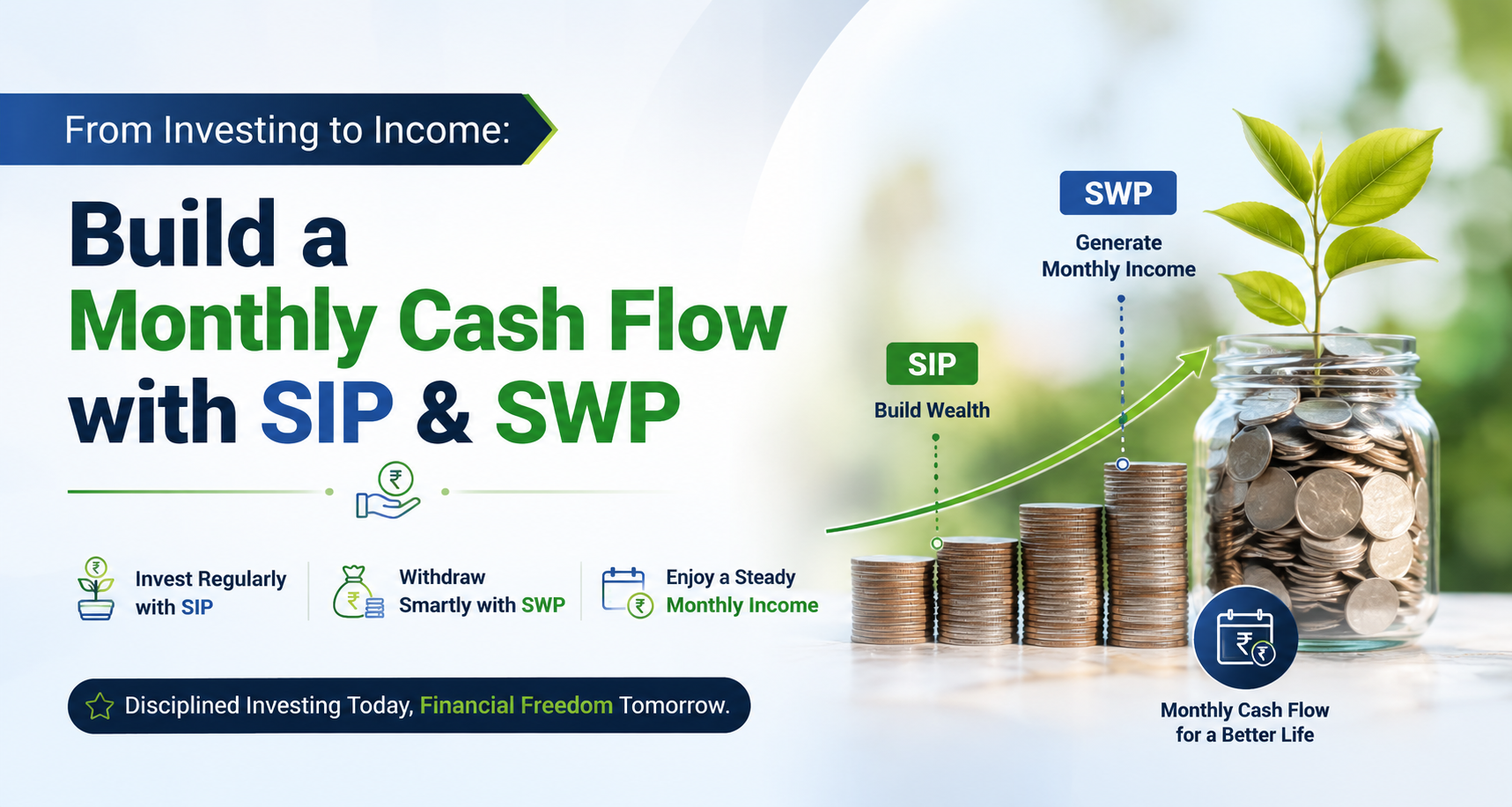
From Investing to Income: Build a Monthly Cash Flow with SIP & SWP
Managing money wisely is not only about saving — it is also about creating a steady income for the future. Whether you are planning for retirement, building wealth, or looking for a regular monthly income, combining a Systematic Investment Plan (SIP) and a Systematic Withdrawal Plan (SWP) can be a smart financial strategy.
This approach helps you invest regularly during your earning years and later convert those investments into a predictable monthly cash flow.
What is SIP ?
A Systematic Investment Plan (SIP) is a way of investing a fixed amount in mutual funds regularly — monthly, quarterly, or weekly. Instead of investing a large sum at once, SIP allows investors to gradually build wealth over time.
For example, if you invest ₹5,000 every month through SIP, your money gets invested consistently, regardless of market conditions. This strategy benefits from rupee cost averaging, meaning you buy more units when prices are low and fewer units when prices are high.
Benefits of SIP
- Encourages disciplined investing
- Suitable for small and regular investments
- Helps reduce market timing risks
- Power of compounding helps wealth grow over time
- Flexible and easy to start
Suppose a person starts investing ₹10,000 monthly through SIP at age 30 and continues for 25 years. Assuming an average annual return of 12%, the accumulated corpus could become substantial enough to support future financial goals.
What is SWP ?
A Systematic Withdrawal Plan (SWP) is the opposite of SIP. Instead of investing regularly, SWP allows investors to withdraw a fixed amount from their mutual fund investment at regular intervals.
This feature is commonly used by retirees or individuals seeking a stable monthly income without completely withdrawing their investment.
For instance, if you have accumulated ₹50 lakh in a mutual fund, you can choose to withdraw ₹25,000 every month through SWP. Meanwhile, the remaining invested amount continues to stay in the market and has the potential to grow.
Benefits of SWP
- Creates regular monthly cash flow
- Offers flexibility in withdrawal amount and frequency
- Remaining investment stays invested
- Helps manage post-retirement expenses
- More tax-efficient in some cases compared to traditional options
How SIP and SWP Work Together
The real financial power comes when SIP and SWP are combined strategically.
Step 1: Wealth Creation Through SIP
During your working years, you invest consistently using SIP. Over time, your investments grow through market appreciation and compounding.
For example:
- Monthly SIP: ₹8,000
- Investment Period: 20 years
- Expected Return: 12% annually
After 20 years, your investment may grow into a sizeable corpus.
Step 2: Monthly Income Through SWP
Once the corpus is built, you can stop SIP and start SWP. This allows you to withdraw a fixed amount every month while keeping the remaining funds invested.
For example:
- Total Corpus: ₹60 lakh
- Monthly SWP: ₹30,000
This creates a regular income stream, helping cover household expenses, medical costs, travel, or retirement needs.
Why This Strategy Works
1. Builds Financial Discipline
SIP encourages consistent investing habits. Even small monthly contributions can create significant wealth over the long term.
2. Creates Passive Income
SWP helps convert investments into monthly income without liquidating the entire fund at once.
3. Fights Inflation
Traditional savings accounts may struggle to beat inflation. Mutual fund investments have historically offered better long-term growth potential.
4. Flexibility and Control
Investors can increase SIP amounts, pause investments, or modify SWP withdrawals based on financial needs.
5. Helps in Retirement Planning
One of the biggest concerns after retirement is maintaining regular income. SIP + SWP provides a practical way to replace salary income with investment-based cash flow.
Things to Consider Before Starting SIP & SWP
While this strategy can be effective, investors should keep a few things in mind:
Choose the Right Mutual Fund
Equity mutual funds may be suitable for long-term SIP goals, while hybrid or debt funds may work better for SWP depending on risk appetite.
Keep Realistic Return Expectations
Markets fluctuate, so returns are never guaranteed. Avoid assuming very high returns while planning future income.
Review Investments Regularly
Financial goals, expenses, and market conditions change over time. Review your SIP and SWP strategy annually.
Understand Tax Implications
Tax treatment may differ based on fund type and holding period. Consulting a financial advisor may help optimize withdrawals.
Final Thoughts
Building wealth is important, but turning that wealth into a reliable monthly income is equally valuable. A smart combination of SIP and SWP can help individuals move from investing to earning — creating long-term financial stability.
By investing regularly through SIP and later withdrawing systematically through SWP, you can create a balanced financial journey that supports both wealth growth and monthly cash flow needs.
Start early, stay consistent, and let your investments work for you — not just for savings, but for income too.