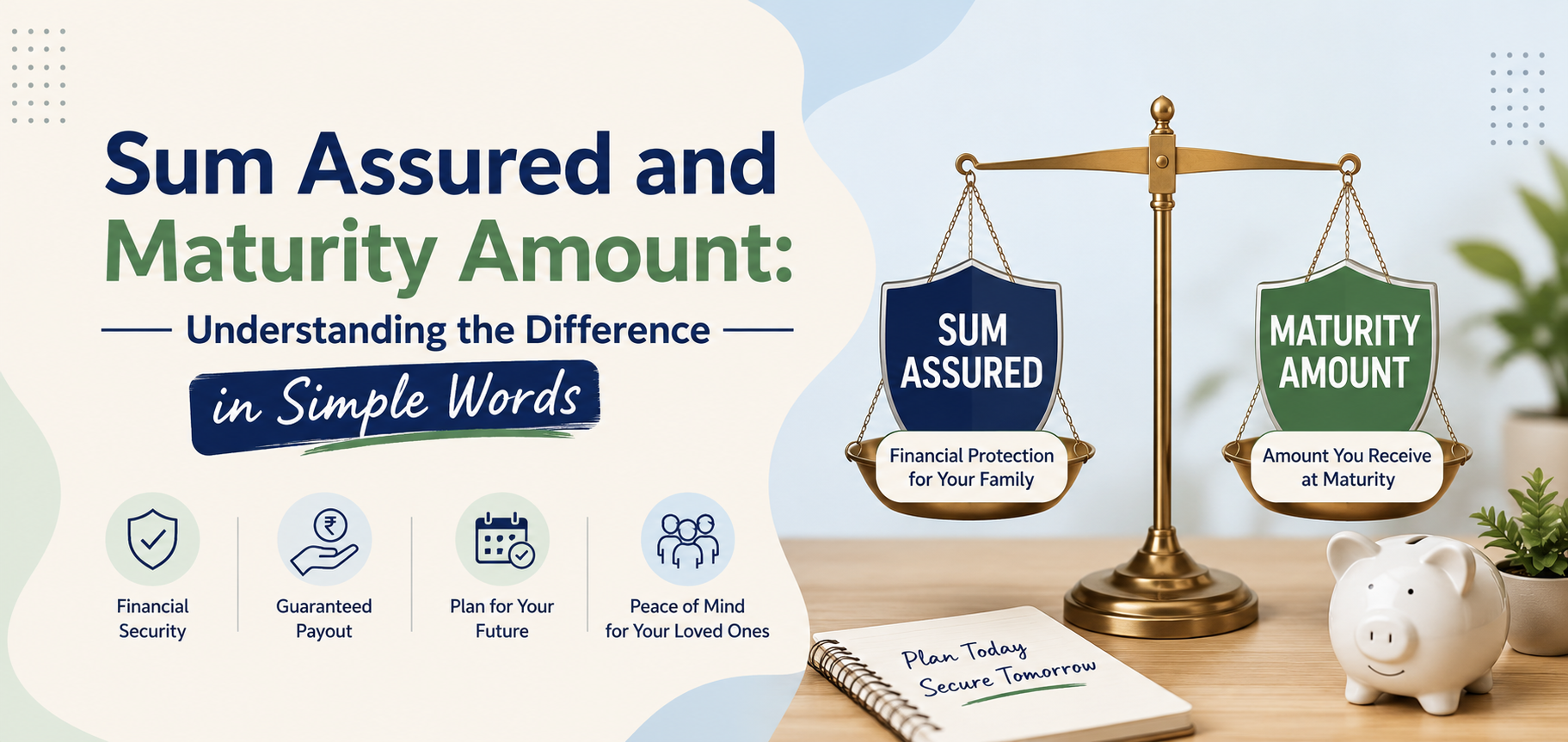
Sum Assured and Maturity Amount: Understanding the Difference in Simple Words
Buying an insurance policy can sometimes feel confusing because of difficult financial terms. Two common words many people hear are Sum Assured and Maturity Amount. If you are new to insurance, these terms may sound similar, but they actually mean different things.
Knowing the meaning of these terms is important because it helps you understand how an insurance policy works and what benefits you may receive in the future.
This guide explains everything in a simple and easy way.
What Does Sum Assured Mean ?
The Sum Assured is the amount decided by the insurance company at the time of buying the policy. It is the fixed amount mentioned in your insurance agreement.
You can think of it as the basic protection value of your insurance plan.
For instance, if your insurance policy mentions a Sum Assured of ₹15 lakhs , this amount becomes the coverage offered under the plan according to policy terms.
The main purpose of the Sum Assured is to provide financial support and security.
People generally select a suitable Sum Assured based on their income, responsibilities, and family needs. A proper amount helps families handle financial expenses more comfortably in difficult situations.
Simply put, Sum Assured is the amount fixed in your insurance policy from the beginning.
What Is a Maturity Amount ?
The Maturity Amount is the total amount paid to the policyholder after successfully completing the policy term.
When the insurance period ends, the company provides the final payout based on the policy benefits.
In many policies, this amount may include additional benefits apart from the original policy value, such as:
- Bonus benefits
- Guaranteed additions
- Loyalty rewards
- Other eligible returns
The final payment you receive after completing the insurance duration is called the Maturity Amount.
In easy language, it is the money received after the policy comes to an end.
Why Is There So Much Confusion ?
Many people believe the amount written in their policy document is exactly what they will receive later. This creates confusion.
The reason is simple — insurance plans work differently.
Some plans are created mainly to provide protection, while others are designed to offer both protection and savings benefits.
Because of this, understanding policy details becomes very important before making a decision.
Do All Insurance Policies Offer a Maturity Benefit ?
No, not every insurance policy gives a maturity amount.
Some insurance plans are created mainly to offer financial security during the policy period.
In these plans, there may not be a final payout after completion.
Other plans are designed to combine protection with savings. These may offer a maturity benefit once the policy duration is completed.
This is why checking the benefits of a policy before purchasing is always a smart decision.
Why Should You Understand These Insurance Terms ?
Understanding insurance terms helps you avoid confusion and make better financial decisions.
Helps in Financial Planning
Knowing what your policy offers can help in planning future expenses like:
- Children's education
- Marriage expenses
- Retirement savings
- Family financial protection
Helps You Select the Right Policy
Different people have different financial goals.
Some people want only financial security for their family, while others prefer plans that also offer savings benefits.
Understanding policy terms makes choosing easier.
Prevents Misunderstanding Later
Sometimes people expect money back after policy completion without checking the benefits clearly.
Reading and understanding policy details in advance can prevent disappointment later.
Things to Check Before Buying an Insurance Policy
Before choosing an insurance plan, it is always better to ask a few basic questions:
- What benefits does this policy provide?
- Will I receive money after policy completion?
- Is this plan suitable for my future goals?
- Does the plan focus mainly on protection or savings?
Getting answers to these questions can help you choose the right insurance policy confidently.
Final Thoughts
Understanding Sum Assured and Maturity Amount is important for anyone planning to buy insurance.
The Sum Assured refers to the fixed amount decided in the policy, while the Maturity Amount refers to the final payout received after the policy period ends, depending on the plan type and benefits.
Learning these simple insurance terms can help you avoid confusion and make better financial choices for yourself and your family.
Before investing in any insurance plan, always take time to understand the policy benefits carefully. A better understanding today can help build a financially secure tomorrow.