Is Income Proof Compulsory for Term Insurance? Latest Update for Policy Buyers
As awareness about financial security continues to grow, term insurance has become one of the most preferred financial protection tools in India. However, many individuals still ask an important question before purchasing a policy: Is income proof compulsory for term insurance ?
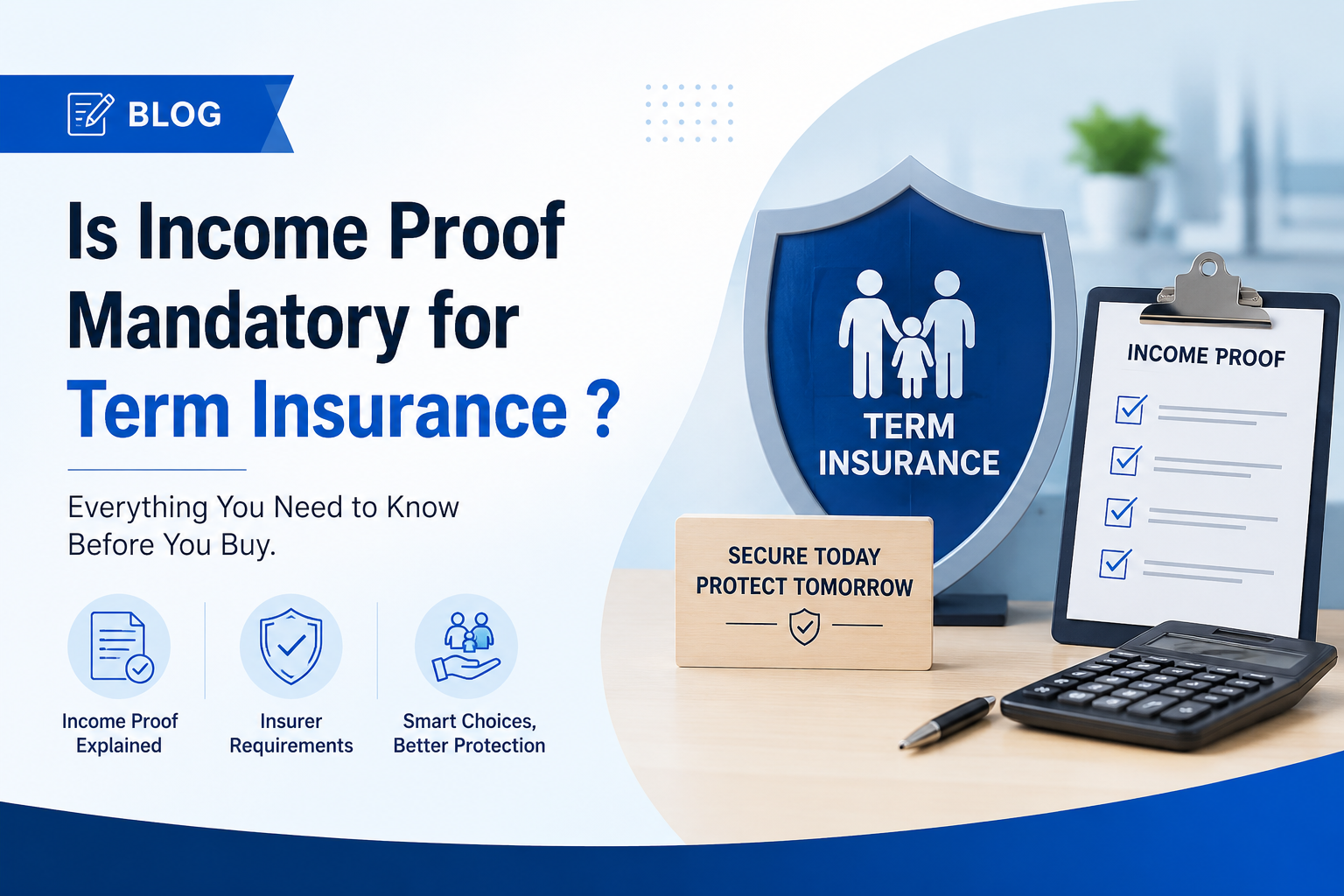
Insurance specialists explain that, in most situations, income proof is required when applying for term insurance. Companies generally request financial documents to understand an applicant’s earning ability and approve a suitable coverage amount. Since term insurance often provides high-value life cover at affordable premiums, insurers carefully review the applicant’s financial profile before issuing the policy.
According to recent insurance industry guidance, applicants choosing larger protection plans such as ₹50 lakh or ₹1 crore are usually expected to provide proof of earnings. Commonly accepted documents for salaried employees include recent salary slips, bank statements, Form 16, and Income Tax Returns (ITR). Self-employed individuals may be asked to submit audited financial statements, GST-related records, or business income documents.
Financial experts state that this process helps insurers determine an appropriate sum assured and prevents situations where coverage exceeds a person’s financial capacity. Many insurers generally approve life cover based on a multiple of annual income, although the exact calculation can vary between providers and customer profiles.
At the same time, the insurance market is evolving. Some insurers have recently introduced limited term insurance options with simplified documentation, particularly for individuals with informal or non-traditional income sources. In selected cases, alternate financial records such as bank transactions, investment history, or asset ownership may be considered instead of traditional salary documents. However, these approvals often depend on insurer guidelines and policy eligibility.
Industry observations also show that incomplete or inaccurate income information may slow down policy approval or affect the amount of insurance offered. Insurance professionals recommend sharing genuine financial details during the application process to avoid complications at the claim stage in the future.
Experts further advise customers to select insurance coverage based on family responsibilities, liabilities, future goals, and repayment obligations rather than opting for unnecessarily high coverage. A balanced term plan can help families manage expenses, loans, and long-term financial needs during difficult times.
With digital insurance services expanding rapidly in India, purchasing term insurance has become more convenient. Even so, documentation requirements may differ from one insurer to another. Comparing plans and preparing financial documents in advance can help speed up approvals and improve the buying experience.