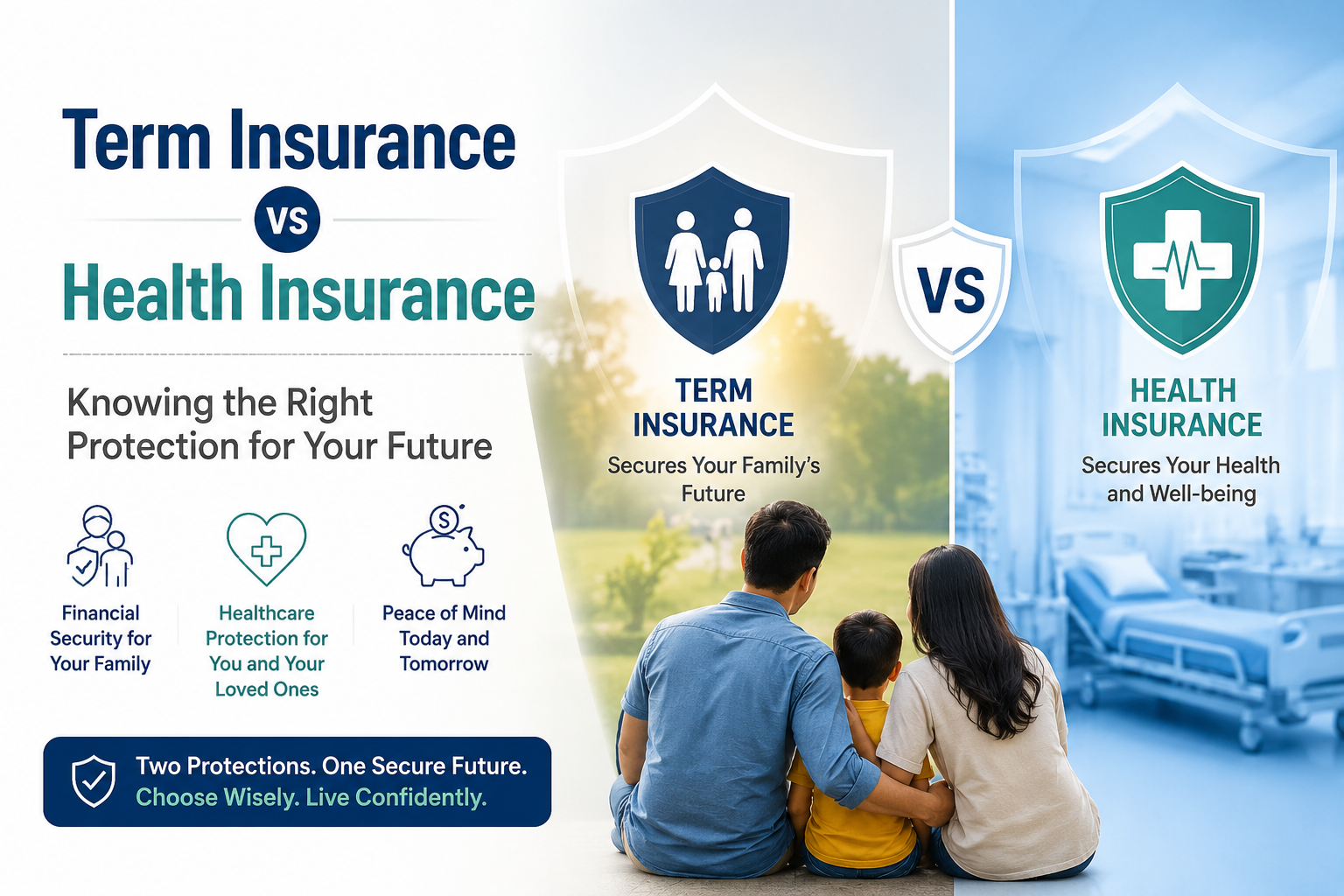
Term Insurance vs Health Insurance: Knowing the Right Protection for Your Future
Financial security has become one of the most important priorities in modern life. Unexpected situations such as medical emergencies or the sudden loss of income can create serious financial pressure for families. This is why insurance plays a vital role in long-term financial planning. Among the most popular forms of protection are term insurance and health insurance. While both offer financial support during difficult times, they are designed for completely different purposes.
Many people misunderstand these policies or believe one insurance plan can cover all risks. However, term insurance and health insurance serve separate functions, and understanding their differences helps individuals make better financial decisions.
Understanding Term Insurance
Term insurance is a type of life insurance policy that provides financial assistance to the insured person’s family if the policyholder passes away during the policy term. It is designed purely for protection and offers a high coverage amount at relatively affordable premiums.
If the insured individual dies while the policy remains active, the nominee receives the sum assured. This amount helps the family manage expenses and maintain financial stability during a challenging period.
Main Features of Term Insurance
- Offers life coverage for a fixed duration
- Provides substantial financial protection at low cost
- Death benefit is paid to family members or nominees
- Optional add-ons such as accidental cover and critical illness riders
- Simple and straightforward insurance plan
Advantages of Term Insurance
The primary purpose of term insurance is to secure the financial future of dependents. The payout received can support:
- Household living expenses
- Education costs for children
- Outstanding loan repayments
- Future financial commitments
- Emergency needs
For individuals with family responsibilities, term insurance acts as a financial safety net that protects loved ones from financial difficulties.
Understanding Health Insurance
Health insurance is a policy that helps cover medical expenses arising from illnesses, accidents, or hospitalization. It reduces the financial burden caused by increasing healthcare costs and ensures access to quality medical treatment.
Depending on the policy, health insurance may include hospitalization charges, surgery costs, medicines, diagnostic tests, and even pre- and post-treatment expenses.
Main Features of Health Insurance
- Covers medical and hospitalization expenses
- Provides cashless treatment at network hospitals
- Available for individuals, families, and senior citizens
- Includes coverage for treatments, surgeries, and emergencies
- Offers tax-saving benefits under applicable regulations
Advantages of Health Insurance
Healthcare expenses can quickly drain savings if proper coverage is unavailable. Health insurance helps individuals manage these costs without major financial stress.
Its benefits include:
- Financial support during medical emergencies
- Better access to healthcare services
- Reduced personal spending on treatment
- Protection against rising medical costs
- Peace of mind for families
As medical inflation continues to rise, health insurance has become essential for every age group.
Key Differences Between Term Insurance and Health Insurance
- PurposeTerm insurance provides financial protection to the family after the policyholder’s death.
- Health insurance covers medical and hospitalization expenses during the policyholder’s lifetime.
- CoverageTerm insurance covers life risk.
- Health insurance covers healthcare and treatment costs.
- Benefit RecipientIn term insurance, the nominee or family receives the payout.
- In health insurance, the policyholder receives coverage for medical expenses.
- Claim SituationTerm insurance claim is made after the insured person’s death during the policy term.
- Health insurance claim is made during illness, injury, surgery, or hospitalization.
- Financial SupportTerm insurance helps the family manage future financial needs.
- Health insurance helps reduce the burden of medical bills.
- Premium CostTerm insurance usually offers high coverage at lower premiums.
- Health insurance premiums depend on age, health condition, and coverage benefits.
- Policy DurationTerm insurance is generally taken for long durations like 20–40 years.
- Health insurance is renewed periodically, usually every year.
- Main ObjectiveTerm insurance secures the family’s financial future.
- Health insurance protects savings from healthcare expenses.
- Coverage AmountTerm insurance typically provides a large sum assured.
- Health insurance provides coverage based on medical treatment limits.
- ImportanceTerm insurance is important for earning individuals with dependents.
- Health insurance is important for everyone due to rising medical costs.
Which Policy is More Important?
Choosing between term insurance and health insurance depends on personal financial goals and responsibilities. However, both are equally important because they address different risks.
Term Insurance is Suitable If:
- Your family depends on your income
- You want to secure your family’s future
- You have loans or financial obligations
- You need affordable long-term protection
Health Insurance is Suitable If:
- You want coverage for medical emergencies
- You are concerned about rising hospital expenses
- You need financial support for treatments and surgeries
- You want to avoid using savings for healthcare costs
Instead of selecting only one option, financial experts often recommend having both policies for complete protection.
Why You Should Have Both Policies
Savings alone may not always be enough to handle emergencies. A major illness can create huge medical bills, while the unexpected loss of an earning member can impact the family’s financial stability.
Health insurance protects your finances during medical emergencies, while term insurance ensures your family remains financially secure even in your absence. Together, they create a balanced financial protection plan.
For example, if an individual requires expensive medical treatment, health insurance helps manage hospital costs. If the family loses its primary earning member, term insurance provides financial assistance that supports daily expenses and future needs.
Combining both policies helps individuals prepare for uncertain situations more effectively.
Conclusion
Term insurance and health insurance are two essential pillars of financial planning. While term insurance provides financial protection to your family after your death, health insurance safeguards you against rising healthcare expenses.
Both policies serve unique purposes and should not be viewed as substitutes for one another. Investing in the right combination of life and health coverage can help individuals and families stay financially prepared for unexpected challenges.
Making smart insurance choices today can lead to greater financial confidence, stability, and peace of mind in the future.