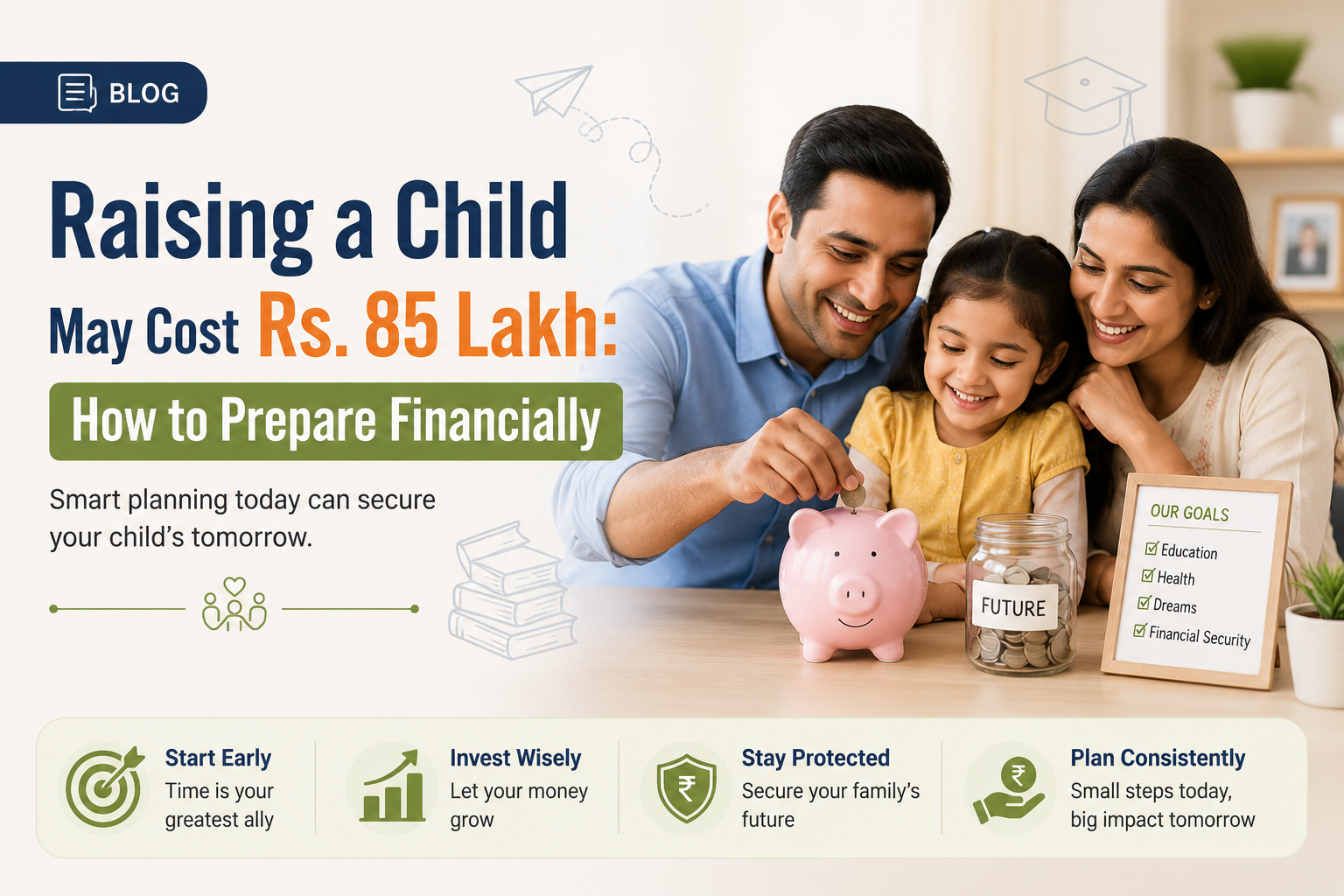
Raising a Child May Cost Rs. 85 Lakh: How to Prepare Financially
Having a child is one of the happiest moments in life, but it also brings long-term financial responsibilities. From education and healthcare to daily needs and future planning, the cost of raising a child in India may reach nearly Rs. 85 lakh or even higher. Although the exact amount depends on lifestyle, city, and inflation, early financial preparation can help parents manage expenses more comfortably.
If you are planning to become a parent or already have children, building a strong financial plan can help secure your child’s future while maintaining your own financial balance.
Why Is Raising a Child Expensive ?
Over the years, the cost of raising children has increased due to higher education fees, rising medical expenses, and changing lifestyle expectations. Today, parents often spend not only on essential needs but also on quality education, activities, and long-term goals.
Below are some key expenses involved in raising a child:
1. Medical and Healthcare Costs
Healthcare is one of the first major expenses parents face. Costs begin from childbirth and continue with vaccinations, regular checkups, and medical emergencies.
Common healthcare expenses include:
- Doctor consultations
- Vaccination costs
- Medicines and treatments
- Emergency medical care
- Health insurance coverage
Choosing a suitable family health insurance plan can reduce financial stress during unexpected situations.
2. Education Expenses
Education is often one of the largest financial commitments for parents. School admissions, tuition fees, books, transport, and coaching classes can significantly impact household budgets.
If parents plan for higher education, especially abroad, costs may increase substantially over time because of inflation.
For instance, an education expense that costs Rs. 10 lakh today may become much more expensive after 15 to 20 years. Proper financial planning can help handle these rising costs.
3. Everyday Living Costs
As children grow, their regular expenses also increase. Everyday spending may include:
- Food and nutrition
- Clothes and footwear
- School essentials
- Toys and entertainment
- Travel and transport
Though these may seem like small expenses, they can become a major financial commitment over several years.
4. Skill Development and Activities
Many parents also spend on activities that support their child’s overall growth and development.
These may include:
- Sports coaching
- Dance or music lessons
- Online educational programs
- Hobby classes
- Educational outings
Such activities can benefit a child’s future but require thoughtful budgeting.
5. Planning for Future Goals
Parents often save money for important milestones in their child’s life, such as:
- College education
- Career opportunities
- Marriage expenses
- Emergency financial support
Without proper preparation, managing these future expenses may become difficult.
Ways to Stay Financially Prepared
Planning in advance can make parenting financially easier. Here are some smart ways to prepare for your child’s future:
Begin Investing Early
Starting investments at an early stage gives your money more time to grow. Even smaller investments made consistently can create a large amount through long-term compounding.
Create Specific Financial Goals
Instead of saving without a plan, define clear financial targets such as:
- Higher education savings
- Healthcare emergency funds
- Activity and skill development budgets
- Long-term financial support
Having clear goals helps parents invest more effectively.
Account for Inflation
Many people plan using today’s expenses without considering future price increases. However, education and healthcare costs usually rise every year.
Including inflation in financial planning can help parents avoid future financial shortages.
Maintain an Emergency Fund
Unexpected situations can happen at any time. Medical needs, school-related costs, or family emergencies may create sudden expenses.
Keeping savings equal to 6 to 12 months of household expenses can provide better financial stability.
Choose Proper Insurance Coverage
Insurance plays an important role in protecting a family financially.
Parents may consider:
- Health insurance for the family
- Life insurance for earning members
- Critical illness coverage
These protections can help ensure that financial goals remain secure even during difficult times.
Invest Regularly
Consistent monthly investments can help parents gradually build a strong financial fund for their child’s future.
Regular reviews of financial plans can also help adjust investments based on income growth and changing needs.
Mistakes Parents Should Avoid
Some financial mistakes can affect long-term planning. These include:
- Delaying investments
- Ignoring rising inflation
- Depending only on savings accounts
- Taking heavy debt unnecessarily
- Not maintaining emergency savings
Parents should focus on balancing their child’s future needs while also securing their own financial well-being.
Conclusion
The cost of raising a child may reach Rs. 85 lakh or more, depending on future needs and family lifestyle. While this figure may appear large, proper financial planning can make it easier to manage.
Starting early, investing wisely, planning for inflation, and protecting your family through insurance can help parents stay financially prepared.
Good parenting involves not only emotional care but also smart financial decisions. Preparing today can create a more secure and stable future for your child tomorrow.