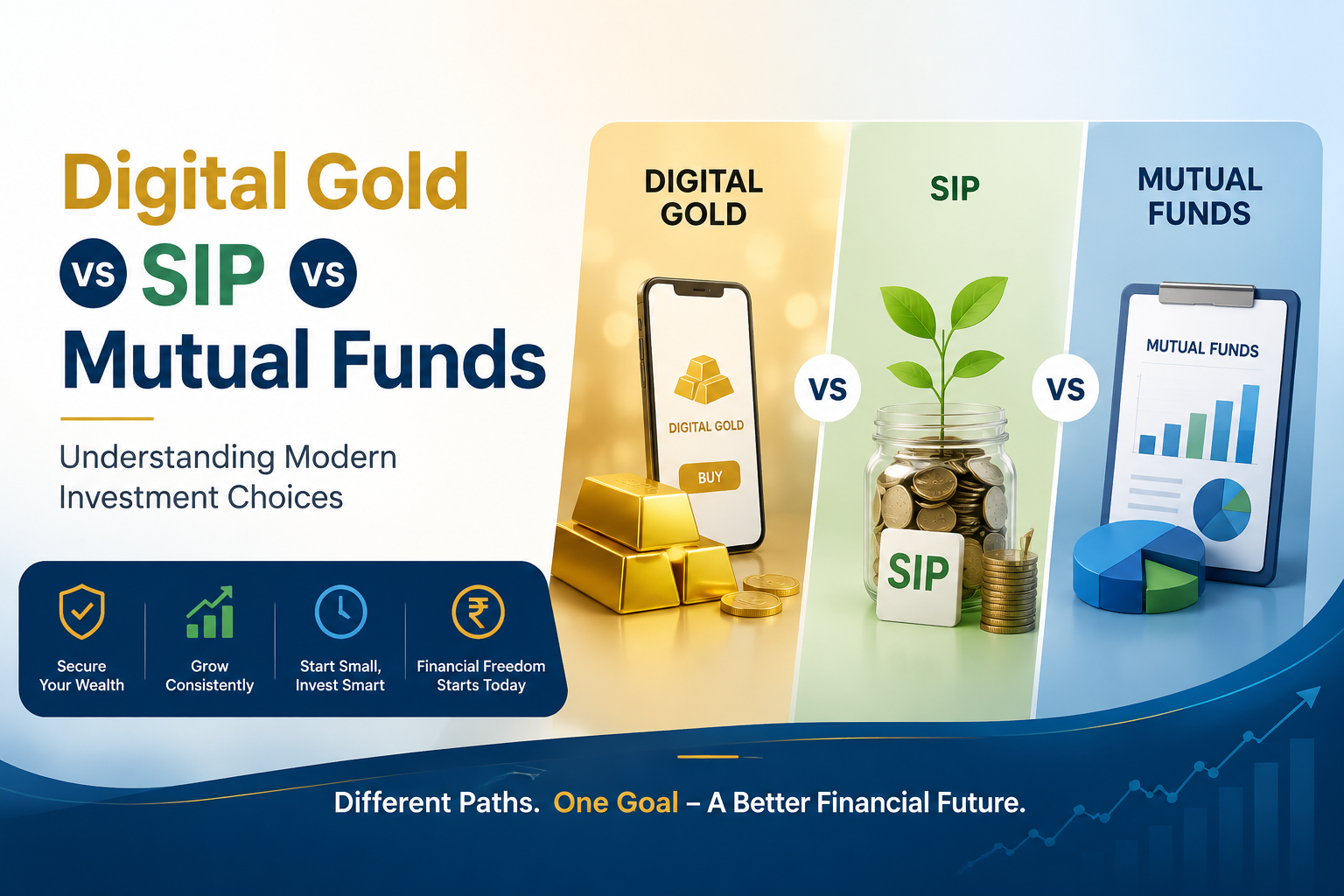
Digital Gold vs SIP vs Mutual Funds: Understanding Modern Investment Choices
Managing money wisely has become more important than ever in today’s economy. Many investors are searching for investment options that offer safety, flexibility, and long-term growth. Among the most popular choices are Digital Gold, SIPs, and Mutual Funds. While all three help people grow their money, they work in very different ways. Knowing their features can help investors make smarter financial decisions.
Digital Gold: Simple Way to Invest in Gold
Digital Gold is an online method of purchasing gold without physically holding it. Investors can buy gold in small quantities through financial apps and digital platforms. The purchased gold is generally stored securely by the service provider.
Digital gold has become popular because it removes the difficulty of storing physical gold while still allowing people to benefit from gold price movements.
Advantages of Digital Gold
- Investors can begin with very low amounts
- Buying and selling can be done online anytime
- No concerns about theft or physical storage
- Gold is often considered a safer asset during economic uncertainty
- Useful for portfolio diversification
Disadvantages of Digital Gold
- Price growth depends completely on gold market trends
- No dividend or interest income
- Additional charges may apply on storage or transactions
- May not create strong long-term wealth compared to equity investments
Digital gold is often preferred by conservative investors who want stability and lower exposure to stock market volatility.
SIP: A Disciplined Investment Approach
A Systematic Investment Plan, commonly called SIP, is a process of investing fixed amounts regularly into mutual funds. Investors can contribute monthly or at other regular intervals depending on their financial comfort.
SIPs are designed to make investing easier and more affordable for people who may not have large amounts for lump-sum investments.
Advantages of SIP
- Encourages consistent investing habits
- Helps investors manage market fluctuations through regular investing
- Suitable for long-term financial planning
- Small investments can grow significantly over time through compounding
- Reduces emotional decision-making during market ups and downs
Disadvantages of SIP
- Returns are not guaranteed
- Equity-based SIPs may face short-term volatility
- Wealth creation usually requires patience and long investment periods
SIPs are commonly chosen by young professionals and long-term investors aiming for financial goals like retirement planning, children’s education, or property purchases.
Mutual Funds: Diversified Investment Option
Mutual funds combine money from multiple investors and invest it across different financial assets such as stocks, bonds, and government securities. These funds are managed by experienced professionals known as fund managers.
There are several types of mutual funds available depending on risk and investment objectives.
Main Types of Mutual Funds
- Equity Funds
- Debt Funds
- Hybrid Funds
- Index Funds
- Sector Funds
Advantages of Mutual Funds
- Professional management of investments
- Diversification lowers investment risk
- Suitable for different financial goals
- Flexibility to invest through SIP or lump sum
- Potential for higher returns over long periods
Disadvantages of Mutual Funds
- Market-linked risks remain
- Some funds may charge expense fees
- Performance may vary based on market conditions
Mutual funds are ideal for investors looking for balanced growth and diversified investment exposure.
Major Differences Between Digital Gold, SIP, and Mutual Funds
Investment Structure
- Digital Gold focuses only on gold investments.
- SIP is an investment method, not a separate product.
- Mutual Funds are professionally managed investment products.
Risk and Stability
- Digital Gold is generally less volatile than equity markets.
- SIP performance depends on the selected mutual fund.
- Equity mutual funds can carry higher risk but higher growth potential.
Growth Potential
- Digital Gold mainly protects wealth during uncertain periods.
- SIPs in equity funds can help create substantial long-term wealth.
- Mutual funds offer growth opportunities depending on asset allocation.
Flexibility
- Digital Gold allows instant online transactions.
- SIP amounts can usually be increased or paused.
- Mutual funds offer multiple investment categories for different goals.
Investment Horizon
- Digital Gold is often used for medium-term safety.
- SIPs work best for long-term investing.
- Mutual funds can be selected for short-, medium-, or long-term needs.
Which Option is Better for You?
There is no single investment option that suits everyone. The right choice depends on financial goals, risk tolerance, and investment duration.
Digital Gold May Be Suitable If:
- You want safer investments
- You prefer gold as an asset class
- You want easy online gold ownership
SIP May Be Suitable If:
- You want to invest regularly with small amounts
- You aim for long-term wealth creation
- You prefer disciplined financial planning
Mutual Funds May Be Suitable If:
- You want diversified investments
- You seek professional fund management
- You are comfortable with market-linked growth
Conclusion
Digital Gold, SIPs, and Mutual Funds each play different roles in financial planning. Digital gold offers convenience and stability linked to gold prices. SIPs help investors create disciplined investment habits and benefit from long-term compounding. Mutual funds provide diversified investment opportunities managed by financial experts.
A balanced financial strategy often includes a combination of these options to achieve both stability and growth. Investors should carefully evaluate their financial objectives before choosing the most suitable investment path.