The Economics Behind No Cost EMI: Understanding How It Really Works
In recent years, No Cost EMI has transformed the way people shop. From smartphones and laptops to home appliances and furniture, consumers can now purchase expensive products without making a large upfront payment. The promise is simple—buy now and pay later in easy monthly installments without paying any interest.
While this sounds like a win-win situation for customers, many people wonder how No Cost EMI actually works. If consumers are not paying interest, who bears the cost? How do retailers, banks, and manufacturers benefit from these schemes?
Understanding the economics behind No Cost EMI can help you make better financial decisions and avoid common misconceptions.
What Is No Cost EMI?
No Cost EMI is a payment option that allows customers to divide the cost of a purchase into monthly installments without an additional interest burden. Instead of paying the entire amount at once, buyers can spread the payment over a fixed tenure such as 3, 6, 9, or 12 months.
For example, if a television costs ₹60,000 and is available under a 12-month No Cost EMI plan, you may pay ₹5,000 per month for one year. The total amount paid remains ₹60,000, making it appear as though there is no financing cost involved.
However, the actual mechanism behind No Cost EMI is more complex than it seems.
The Business Model Behind No Cost EMI
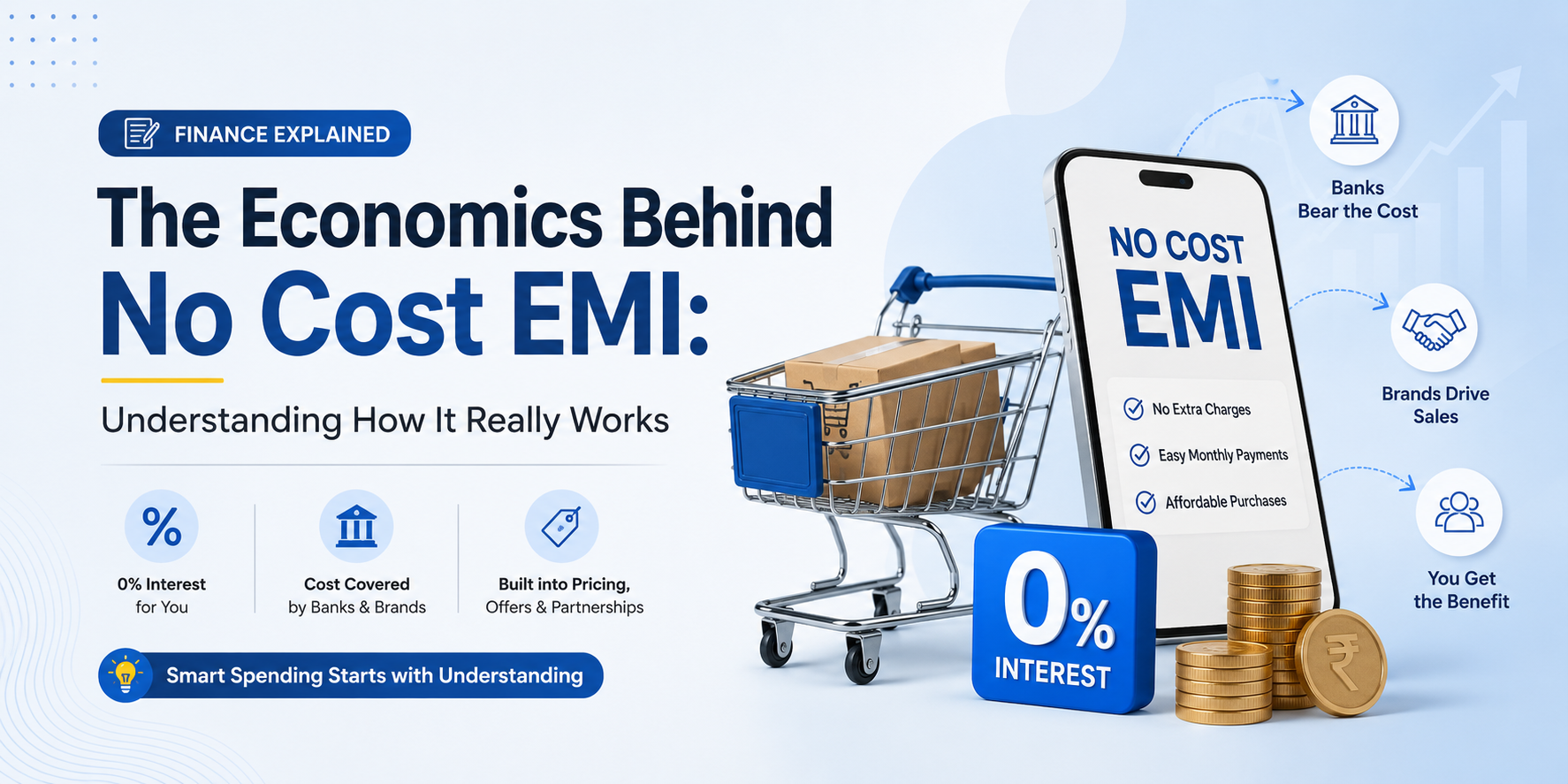
Contrary to popular belief, financial institutions do not provide loans without earning revenue. Banks and lenders generally charge interest on EMI transactions. The reason customers do not see this interest is because it is often absorbed by the retailer or product manufacturer.
In many cases, the seller provides a discount equivalent to the interest amount. This discount is adjusted against the interest charged by the lender, resulting in what customers perceive as a “No Cost” EMI.
This arrangement creates a balanced ecosystem where:
- Customers receive affordable payment options.
- Retailers increase sales.
- Manufacturers sell more products.
- Banks continue earning revenue.
Why Retailers Promote No Cost EMI
Retailers understand that high product prices can discourage potential buyers. A customer may hesitate to spend ₹80,000 on a laptop in one payment but may feel comfortable paying ₹6,667 per month through an EMI plan.
By reducing the immediate financial burden, No Cost EMI encourages purchasing decisions that might otherwise be postponed.
Increased Sales Volume
Products become more accessible to a larger group of customers. As affordability improves, sales volumes often increase significantly.
Higher Revenue Per Customer
Customers frequently upgrade to premium products when they focus on monthly installment amounts rather than the total product cost.
Improved Customer Experience
Flexible payment options enhance convenience and make shopping more attractive.
Competitive Differentiation
Retailers offering No Cost EMI often gain an advantage over competitors who require full upfront payment.
How Banks and Financial Institutions Earn
Although customers may not directly pay interest, banks and lending partners still generate revenue through various channels.
Interest Compensation
Retailers or manufacturers often compensate banks for the interest component associated with the loan.
Processing Charges
Some EMI schemes include processing fees that generate additional income for lenders.
New Customer Acquisition
EMI programs help banks attract new credit card holders and borrowers.
Long-Term Customer Relationships
Once customers begin using financial products from a lender, they may later purchase insurance, personal loans, or premium banking services from the same institution.
Why Manufacturers Support No Cost EMI
Manufacturers are equally interested in financing partnerships because they help drive product demand.
Consumers are more likely to purchase expensive electronics, appliances, and gadgets when payment can be spread over several months. This helps manufacturers achieve sales targets and expand market reach.
Faster Inventory Movement
Products move more quickly from warehouses to customers, reducing inventory costs.
Increased Market Penetration
No Cost EMI enables companies to reach customers who may not have sufficient funds for immediate purchases.
Stronger Brand Positioning
Attractive financing offers improve product appeal and encourage brand preference.
Better Sales During Promotional Seasons
Festive sales and special campaigns become more effective when combined with EMI offers.
Consumer Psychology Behind No Cost EMI
One reason No Cost EMI has become so successful is because it aligns with consumer spending behavior.
Most people evaluate affordability based on monthly expenses rather than total costs. A product priced at ₹50,000 may seem expensive, but a monthly payment of ₹4,167 often feels manageable.
This psychological effect increases purchase confidence and reduces hesitation.
Consumers tend to focus on:
- Monthly installment amount
- Loan tenure
- Immediate ownership benefits
Rather than concentrating solely on the total purchase value.
Hidden Costs Consumers Should Watch For
Although No Cost EMI can provide genuine value, buyers should always examine the terms and conditions carefully.
Processing Fees
Certain lenders charge one-time fees that increase the overall cost of the purchase.
GST Charges
Taxes may apply to processing fees and other service-related charges.
Late Payment Penalties
Missing EMI payments can result in additional charges and negatively affect your credit score.
Foreclosure Costs
Some lenders impose fees if customers choose to close the loan before the agreed tenure.
Opportunity Cost of Discounts
In some cases, customers may lose an upfront discount by selecting a No Cost EMI option. Comparing both payment methods is essential before making a decision.
Benefits of Choosing No Cost EMI
Better Cash Flow Management
Customers can preserve their savings while purchasing required products.
Immediate Product Ownership
There is no need to wait months or years to accumulate the full purchase amount.
Improved Financial Flexibility
Available cash can be used for investments, emergencies, or other priorities.
Convenience
The repayment process is usually automated and easy to manage.
Potential Drawbacks of No Cost EMI
Encourages Overspending
Easy financing may tempt consumers to buy products beyond their actual budget.
Multiple EMI Commitments
Taking several EMI plans simultaneously can strain monthly finances.
Reduced Savings
Regular installment payments may reduce the ability to save consistently.
Financial Discipline Required
Missed payments can lead to penalties and credit score issues.
How to Decide Whether No Cost EMI Is Right for You
Before choosing a No Cost EMI plan, ask yourself the following questions:
- Is the purchase genuinely necessary?
- Can I comfortably afford the monthly installment?
- Are there any hidden fees or charges?
- Am I giving up a significant upfront discount?
- Will this EMI affect my future financial goals?
If the answers support your financial situation, No Cost EMI can be a useful tool for managing large purchases.
Conclusion
No Cost EMI is one of the most effective financial innovations in modern retail. It allows consumers to purchase products without making large upfront payments while helping retailers, manufacturers, and lenders grow their businesses.
Although the offer appears interest-free, the financing cost is typically absorbed through discounts, partnerships, and commercial arrangements between sellers and financial institutions. This is what makes the economics behind No Cost EMI work.
For consumers, the key is to look beyond the marketing message and understand the complete cost structure. When used wisely, No Cost EMI can improve affordability, preserve cash flow, and make important purchases more manageable without creating unnecessary financial stress.